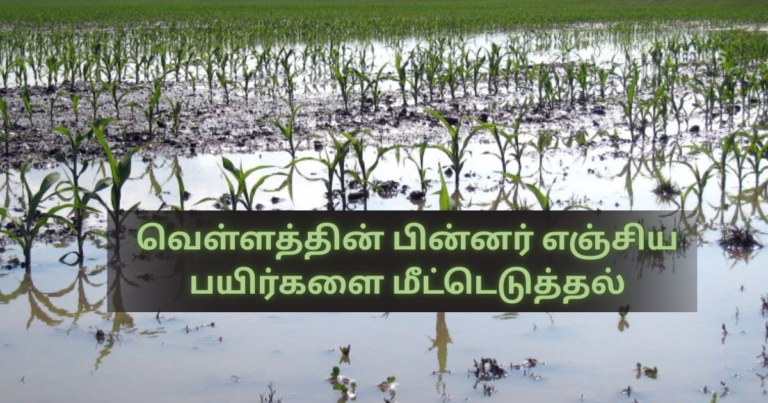
வெள்ளம் தேங்குவதால் பயிரில் ஏற்படும் நோய்கள் பெரும்பாலும் பூஞ்சண மற்றும் பக்டீரியா தொற்றுகளாகும்.
வெள்ள நிலைமைகளின் போது, பயிரின் வேரானது சத்துக்களை உறிஞ்சும் அளவு மிகவும் குறைவடைவதால் இது வாடல் நோய்க்கும் வழிவகுக்கும்.
இதைத் தடுக்க, தோட்டத்தில் / வயலில் நீர் வடியும் வழிகளை வெட்டிவிடல், இலைவழியாக திரவ உரம் மற்றும் கரைசல்கள் தெளித்தல், காய்ந்த மற்றும் வாடிய இலைகளை நீக்குதல் போன்ற செயற்பாடுகள் மிகவும் உதவும்.
வெள்ளத்தால் ஏற்படும் பொதுவான நோய்கள் மற்றும் அறிகுறிகள்
கபில புள்ளி நோய் : பைபோலாரிஸ் ஒரைசே (Bipolaris oryzae) எனப்படும் பூஞ்சணத்தால் ஏற்படும் இந்த நோயை இலைகளில் கபில/ பழுப்பு நிறப் புள்ளிகள் தோன்றி, பரவுவதன் மூலம் இனங்காணமுடியும்.
வாடல் (wilt): நீர் தேங்குவதால் ஏற்படும். இலைகள் வெளிறி, நிறம் மாறி, வெள்ளை / மஞ்சள் / சிவப்பு நிறமாக மாறும்.
பக்டீரிய இலைக்கருகல் (Bacterial Leaf Blight) நோயானது பக்டீரியாவால் ஏற்படும். இலையில் மஞ்சள்/கபில நிற சிதைவுகள் தோன்றும்.
தண்டு அழுகல் நோயானது பூஞ்சணங்களால் ஏற்படும். இதன்போது பயிரின் அடிப்பகுதி அழுகிவிடும்.
பாதுகாப்பு மற்றும் தடுப்பு முறைகள்.
தோட்டத்தில் / வயல்களில் நீர் தேங்காமல் வடியச் செய்துகொள்வது மிக முக்கியம்.
களைகள் மற்றும் காய்ந்த இலைகளை வயலில் இருந்து அகற்றி தோட்டத்தை சுத்தமாக வைத்திருத்தல் பூச்சிகள் மற்றும் நோய் தாக்கத்தைக் குறைக்கும்.
இலைவழியாக உரம் கொடுத்தல் என்பது வேரின் உறிஞ்சு திறன் குறையும் போது இலை வழி உறிஞ்சலினூடாக போசணை சமநிலை பேணலாகும்.
இதற்கு முட்டை-வெங்காயக் கரைசல் கொடுத்தல். மற்றும் பொட்டாஷ் பக்டீரியா கரைசலை, ட்ரைக்கடெர்மா விரிடியுடன் இலைவழி கொடுப்பது பயிரை விரைவாக மீட்க உதவும்.
(மேற் கூறிய விடயங்கள் வழக்கமான மழைக்கால நடவடிக்கைகளேயாகும். ஆயினும் இந்த ஆண்டு எமது நாட்டில் நிகழ்ந்த டிட்வா சூறாவளி வெள்ளம் போன்ற பாரதூரமான நிகழ்வுகளில் எஞ்சியுள்ள பயிர்களையாவது இம்முறைகள் மூலம் ஓரளவுக்கு மீட்டெடுக்கமுடியும்.)
CSJ Agri
06/12/2025
மேலதிக தகவல்களுக்கு மாற்றம் செய்திகள் இணையத்தளத்தினுள் பிரவேசியுங்கள்.
மேலதிக தகவல்களை உடனுக்குடன் பெற்றுக்கொள்ள மாற்றம் செய்திகள் முகநூல் பக்கத்தை பின்தொடரவும்.
Recovering Remaining Crops After Floods
Most diseases that affect crops after floodwater stagnation are caused by fungal and bacterial infections.
During flooding conditions, the plant roots absorb very little nutrients, which can also lead to wilt disease.
To prevent this, activities such as cutting drainage channels in the field/garden, applying foliar liquid fertilizers and solutions, and removing dried and wilted leaves are highly beneficial.
Common Diseases and Symptoms Caused by Floods
Brown Spot Disease:
This disease is caused by the fungus Bipolaris oryzae. It can be identified by the appearance and spread of brown or dark patches on the leaves.
Wilt:
Caused by water stagnation. Leaves become pale, discolored, and may turn white, yellow, or red.
Bacterial Leaf Blight:
This disease is caused by bacteria. Yellow or brownish lesions appear on the leaves.
Stem Rot:
Caused by fungi. The lower part of the plant rots during this condition.
Preventive and Protective Measures
- Ensuring proper drainage in fields/gardens to prevent water stagnation is extremely important.
- Removing weeds and dried leaves and keeping the field clean helps reduce pest attacks and disease spread.
- Foliar fertilization helps maintain nutrient balance when root absorption capacity is reduced.
For this, applying egg–onion solution, potassium bacterial solution, and foliar application of Trichoderma viride helps the crop recover quickly.
(The above-mentioned practices are standard rainy-season measures. However, in severe situations like the Ditva cyclone and flooding that occurred in our country this year, these methods can help recover at least some of the remaining crops.)
CSJ Agri
06/12/2025